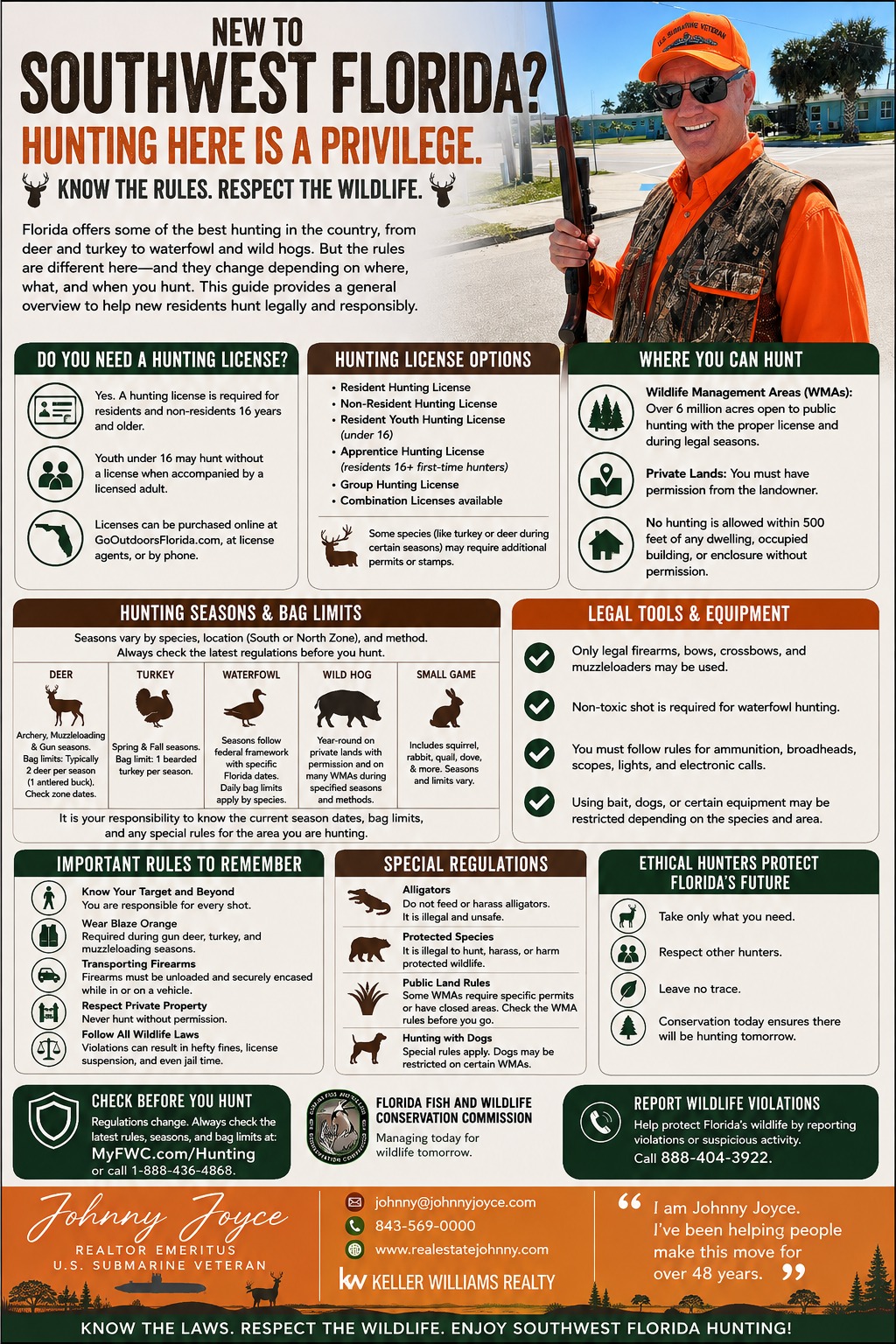
Hunting in Southwest Florida offers a distinctive outdoor experience shaped by cypress swamps, pine flatwoods, open prairies, wetlands and subtropical wilderness. From white-tailed deer and wild turkey to wild hogs, small game and migratory birds, the region provides opportunities for both experienced sportsmen and people who are new to Florida hunting. Before entering the field, hunters should understand Florida hunting license requirements, seasonal restrictions, public-land regulations and the special challenges of hunting in Southwest Florida.
Popular Game Species in Southwest Florida
White-tailed deer are among the most popular game animals in the region. Deer hunting opportunities generally include archery, crossbow, muzzleloading gun and general gun seasons. Southwest Florida is primarily within Florida’s Zone A, but deer-management-unit boundaries and antler requirements can vary. Hunters should confirm the correct zone, Deer Management Unit, season dates, legal methods of take and current bag limits before every trip.Wild turkey hunting is another major attraction. South Florida is home to the Osceola wild turkey, a subspecies found only in peninsular Florida. Spring turkey hunts are especially popular, and some public hunting areas require quota permits. Turkey regulations address season dates, legal shooting hours, bag limits and permitted methods, so hunters should review the current rules for the property they intend to hunt.Wild hog hunting is available in many parts of Southwest Florida. Feral hogs damage wetlands, native vegetation, agricultural land and wildlife habitat, making population control an important management tool. Rules for hunting wild hogs can differ significantly between private property and public wildlife management areas. Public-land hunters must follow the regulations established for the individual area, including its seasons, access rules and weapon restrictions.Depending on the location and season, hunters may also pursue gray squirrel, rabbit, raccoon, dove, duck and other migratory game birds. Migratory bird hunting is governed by additional state and federal requirements, including species-specific seasons, bag limits, shooting hours and approved ammunition rules.
Where to Hunt in Southwest Florida
Public hunting in Southwest Florida is available through the state’s Wildlife Management Area system and certain federally managed properties. Popular destinations include Big Cypress Wildlife Management Area, Dinner Island Ranch Wildlife Management Area, Okaloacoochee Slough Wildlife Management Area and other public lands across Collier, Hendry, Lee and neighboring counties.Dinner Island Ranch is known for deer, turkey, wild hog, dove and migratory-bird hunting. Many of its hunts are managed through Florida’s quota-permit system to control the number of hunters and support a safer, higher-quality experience. Florida Fish and Wildlife Conservation Commission information about Dinner Island Ranch emphasizes the importance of checking the property’s current regulations brochure and hunt calendar before visiting.Big Cypress National Preserve also provides seasonal opportunities for deer, wild turkey and wild hog hunting. It is managed cooperatively by the National Park Service and the Florida Fish and Wildlife Conservation Commission. Because it is both a national preserve and part of the Big Cypress Wildlife Management Area, special federal and area-specific regulations may apply. Alligator hunting is prohibited within the national preserve. Hunters should review both the applicable FWC brochure and Big Cypress hunting information from the National Park Service.Public hunting areas are not governed solely by Florida’s general season dates. Every WMA can have its own hunt dates, quota requirements, legal weapons, check-station procedures, vehicle restrictions, camping rules and access hours. The regulations brochure for the individual property should always be consulted before a hunt.Private-land hunting requires the landowner’s permission. Property that appears undeveloped, unfenced or unposted should never be assumed open to hunting. Written permission is advisable, and hunters must still follow applicable state and federal wildlife laws.
Florida Hunting Licenses and Permits
Florida residents and nonresidents generally need a valid Florida hunting license unless they qualify for a legal exemption. Additional permits may be required depending on the species, location and type of hunt. These may include a Wildlife Management Area permit, archery permit, crossbow permit, muzzleloading gun permit, turkey permit, migratory bird permit, Florida waterfowl permit, federal duck stamp or quota-hunt permit.Quota permits are especially important when planning a Southwest Florida public-land hunt. They limit participation on selected hunts and properties, and application periods may begin months before the season. Some hunts do not require quotas, while others are accessible only to hunters selected through the limited-entry process.Hunters born on or after June 1, 1975, generally must complete an approved hunter-safety course before purchasing a Florida hunting license. Florida recognizes qualifying hunter-safety certifications from other states. A supervised hunter-safety mentoring deferral may be available to eligible hunters who have not completed the course. Complete requirements are available from the FWC Hunter Safety Program.
Essential Hunting Rules and Safety
Florida hunting seasons, bag limits and legal equipment vary by species, zone and property. Hunters should verify all of the following before leaving home:
The correct hunting zone and Deer Management Unit
Opening and closing dates for the intended species
Daily and seasonal bag limits
Antler and antlerless-deer requirements
Legal firearms, bows, crossbows or muzzleloaders
Quota-permit and WMA-permit requirements
Shooting hours and check-station procedures
Rules for hunting with dogs
Vehicle, off-road vehicle and road-access restrictions
Camping, parking and entry requirements
Migratory-bird stamps, permits and ammunition restrictions
Anyone hunting with a firearm should positively identify the target and what lies beyond it, maintain safe muzzle control and keep the firearm unloaded until actively hunting in a lawful location. Bright hunter-orange clothing is strongly recommended and may be required during particular seasons or hunts. In remote areas, hunters should carry water, navigation equipment, weather protection, a first-aid kit and a reliable way to communicate.
Southwest Florida’s environment presents additional concerns. Heat, humidity, sudden thunderstorms, deep water, mud and rapidly changing trail conditions can make travel difficult. Hunters may encounter alligators, venomous snakes, black bears and other wildlife. Cypress swamps and flatwoods can also look deceptively similar in every direction, making a GPS device, compass and offline map essential.
Preparing for a Southwest Florida Hunt
Successful hunting in Southwest Florida begins with careful preparation. Scout the property when permitted, study access roads and boundaries, and identify areas where deer, turkey or hogs may travel between bedding, feeding and watering locations. Pay attention to wind direction and changing water levels. During warmer periods, plan for rapid meat recovery and cooling after a successful harvest.
Before each trip, review the latest Florida hunting regulations, current season dates and bag limits and the regulations brochure for the specific WMA. Regulations can change annually, and statewide rules may differ from public-land requirements.
With the correct licenses, careful planning and respect for wildlife and private property, hunting in Southwest Florida can be a rewarding way to experience one of the state’s most distinctive natural environments. Responsible hunters help support conservation, wildlife management and the long-term protection of Florida’s outdoor traditions.