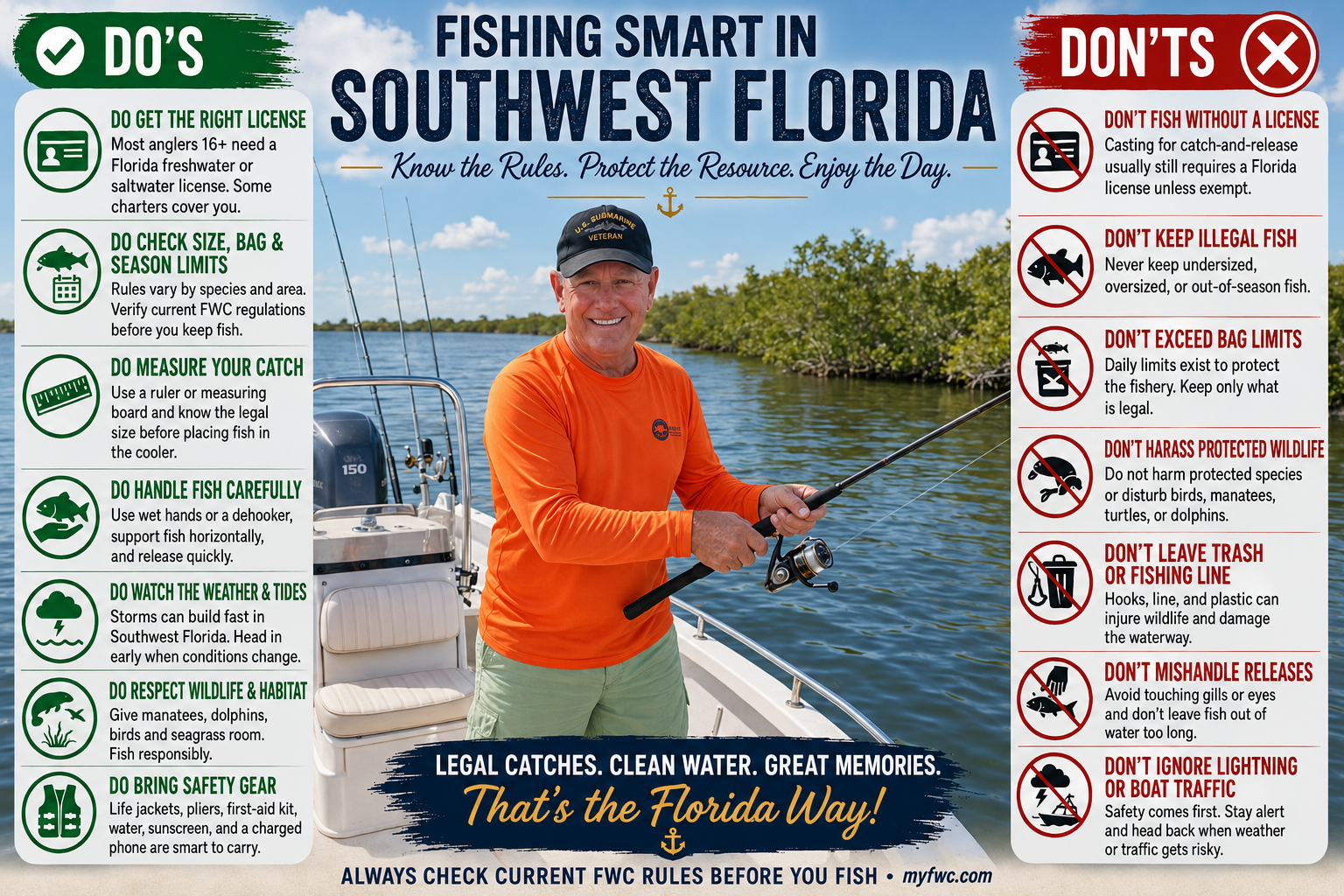
Fishing is one of the great pleasures of living in Southwest Florida. From the backwaters and mangrove shorelines around Fort Myers and Cape Coral to Pine Island Sound, Sanibel, Estero Bay and the Gulf, anglers can enjoy everything from quiet inshore fishing to offshore reef fishing.
But Florida’s fishing regulations are designed to protect those waters and the fish populations that make them special. Before heading out, anglers should know the basic licensing requirements, understand the rules for the species they are targeting, and practice safe and responsible fishing.
Start With the Right Fishing License
Most people fishing in Florida need the appropriate freshwater or saltwater fishing license, although Florida provides a number of exemptions. Nonresidents age 16 and older generally need a Florida fishing license, and fishing on a catch-and-release basis can still require one. Passengers fishing aboard a properly licensed saltwater charter vessel may be covered by the vessel’s license rather than needing an individual saltwater license.
Certain activities also require additional permits or designations. These can include fishing for snook, harvesting spiny lobster, shore-based shark fishing, some reef-fish activities and recreational crab trapping.
Check the Rules Before You Keep a Fish
One of the most important things to remember about Florida fishing is that the rules are not the same for every species.
Depending on the fish and the location, regulations may include:
Minimum or maximum size limits
Slot limits
Daily bag limits
Vessel limits
Closed seasons
Special gear requirements
Species that must be released
These regulations can change, so anglers should check the current Florida Fish and Wildlife Conservation Commission rules before every trip rather than relying on something they remember from a previous season. FWC specifically provides current saltwater recreational regulations and also recommends the Fish Rules app for location-based fishing regulations.
Measure Your Catch Before Putting It in the Cooler
Keep a proper measuring device aboard your boat or with your fishing gear. Know how the species you are targeting is legally measured and confirm that the fish falls within the current legal size range before keeping it.
If there is any doubt, release the fish.
Keeping an undersized, oversized, out-of-season or otherwise prohibited fish can result in enforcement action and also works against the conservation efforts that keep Southwest Florida’s fisheries healthy.
Practice Responsible Catch and Release
Fish that are going to be released should be handled carefully and returned to the water as quickly as possible.
FWC recommends minimizing handling, wetting your hands before touching a fish, supporting the fish horizontally when it must be lifted, avoiding the gills and eyes, and keeping the fish in the water whenever practical. Dehooking tools can also allow fish to be released more quickly and safely.
When fishing deeper water for reef species, anglers should also be familiar with barotrauma and the rules involving descending devices or venting tools. Florida requires appropriate equipment in certain reef-fishing situations to help released fish survive.
Respect Wildlife and the Environment
Southwest Florida anglers share the water with manatees, dolphins, sea turtles, shorebirds and countless other species.
Give wildlife plenty of space and avoid disturbing animals or sensitive habitat. Fishing line, hooks and plastic should never be left behind. Discarded line can become especially dangerous when it entangles birds, turtles and marine mammals.
Seagrass beds and shallow-water areas should also be treated carefully. They are important nursery habitat for many of the fish species anglers come to Southwest Florida to enjoy.
Keep Safety Ahead of the Fishing
Southwest Florida weather can change quickly, particularly during the warmer months. Check the forecast before leaving, watch the sky while you are fishing and never remain on the water when lightning or deteriorating conditions make the trip unsafe.
Anglers fishing from boats should carry the required boating safety equipment along with basic fishing essentials such as pliers, a dehooker, measuring device, drinking water, sunscreen, first-aid supplies and a charged phone.
Pay attention to boat traffic, shallow water, tides and changing conditions. No fish is worth taking an unnecessary risk.
The Southwest Florida Way
Responsible fishing does not mean taking the fun out of the experience. It helps ensure that the experience will still be available for the next generation.
Get the proper license. Check the current regulations. Keep only legal fish. Handle released fish carefully. Respect wildlife, clean up fishing line and trash, and keep safety first.
Legal catches, clean water and great memories — that’s the Florida way.